
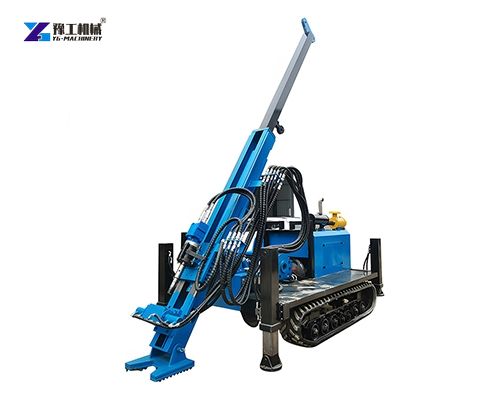
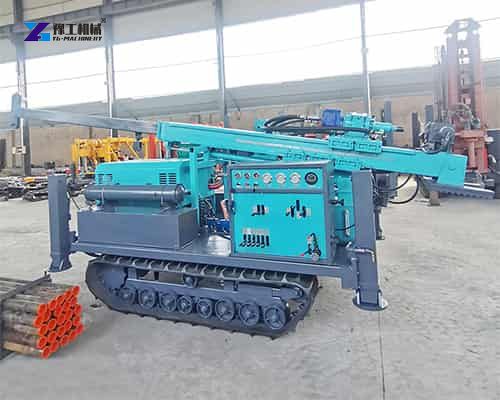
Core sample drilling machine is one of the most essential pieces of site‑work hardware when you are looking for reliable equipment to collect intact rock and soil samples from underground layers. This type of drilling device is widely used to retrieve undisturbed core samples, helping engineers and geologists understand subsurface conditions before construction, mineral prospecting, water well development, and other field assignments. Many project managers face troubles including unstable drilling performance, short machine service life, and difficulty adapting to complex rock formations when selecting drilling rigs. A well‑built core drilling machine for mineral exploration can resolve these pain points by delivering consistent sample quality and flexible working parameters for different depth demands. Our series of core drilling machines for mining covers multiple model options to match small‑scale exploration and heavy‑duty deep drilling assignments.
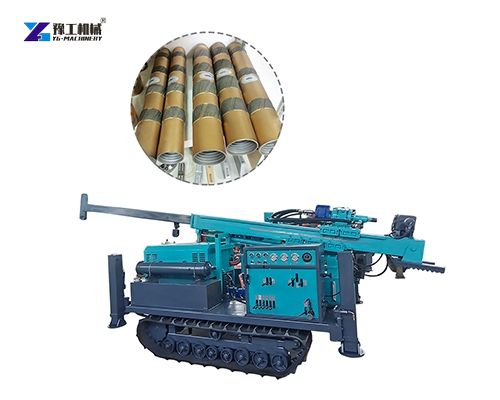
Parameters of Core Sample Drilling Machine
| Model | YGX-400 | YGX-600 | YGX-800 | YGX-1000 |
| Drilling Depth(M) | 180-400-500 | 200-600-650 | 400-800-1000 | 500-1000-1100 |
| Rated pressure(MPA) | 21 | 21 | 25 | 28 |
| Rated Flow(L/min) | 168 | 192 | 260 | 300 |
| Heat Dissipation Mode | Air cooling+water cooling | |||
| Engine Brand | Yuchai | Yuchai | Yuchai | Cummins |
| Rated power/speed | 78kW/ 2400r/min | 92kW/ 2400r/min | 92kW/ 2400r/min | 154kW/
2400r/min |
| Drilling Angle(°) | 0-90 | 45-90 | 45-90 | 45-90 |
| Lifting Force(T) | 12 | 16 | 24 | 30 |
| Feed Force(T) | 6 | 8 | 12 | 15 |
| Hydraulic Mud pump flow | 30-90(L/min) | 30-90(L/min) | 90-180(L/min) | 90-180(L/min) |
| Hydraulic Mud pump power | 4-7(MPA) | 4-7(MPA) | 4-7(MPA) | 4-7(MPA) |
| Dimension | 4000*1900*1800mm | 4000*2000*1800mm | 5500*2100*2000mm | 6000*2200*2400mm |
| Weight | 4.3T | 4.5/5.5T | 6.5T | 7.5T |
What Makes This Core Drilling Machine for Mineral Exploration Stand Out in Field Operations?
Designed for tough outdoor working environments, this core sample drilling machine integrates mature hydraulic control and a dual‑mode heat dissipation system. The dual cooling solution combining air cooling and water cooling keeps the whole system stable during long‑hour continuous running, avoiding overheating failures on remote job sites. Multiple power configurations are available, including well‑known engine brands for stable power output and low maintenance costs. Operators can adjust the drilling angle within a reasonable range to finish vertical and inclined drilling tasks according to the actual terrain. The lifting force and feed force are reasonably calibrated, so the rig can handle hard rock layers without frequent jamming. Every model goes through strict factory testing to ensure reliable performance during sample-taking work.
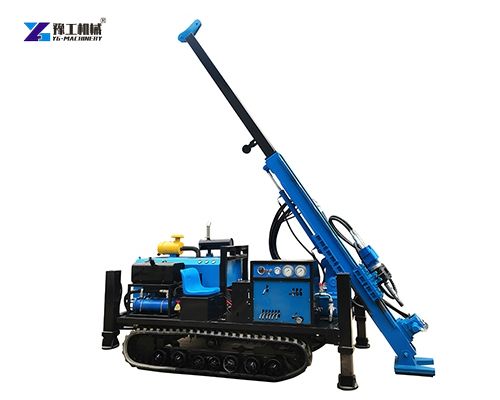
Why Core Sampling Matters in Every Serious Exploration Program
Every major engineering and exploration decision starts with a simple question: what is actually down there? Maps, geophysical surveys, and historical records can narrow the possibilities, but they cannot replace physical evidence. A core sample is that evidence. It shows the exact sequence of layers beneath a site, the condition and strength of the rock, the presence of valuable minerals, and the location of water-bearing zones. For this reason, drilling a proper core is rarely an optional step. It is the point where planning ends and verified knowledge begins.
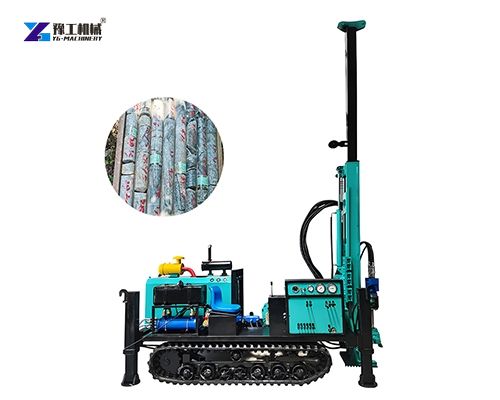
Core Features and Functional Advantages
Every core sample drilling machine in this lineup is built to maximize core recovery while minimizing non-productive downtime.
The high-torque hydraulic head delivers consistent rotational power across varying gear ratios, allowing operators to adjust speed and power according to the rock hardness encountered.
Strong lifting and feed force systems prevent bit stalling and enable smooth retraction of long drill strings.
Furthermore, the dual air and water heat dissipation system prevents hydraulic oil overheating, extending pump and valve service life in hot climate environments.
Compact rig footprints combined with optimized weight distribution make transportation easier between isolated field sites.
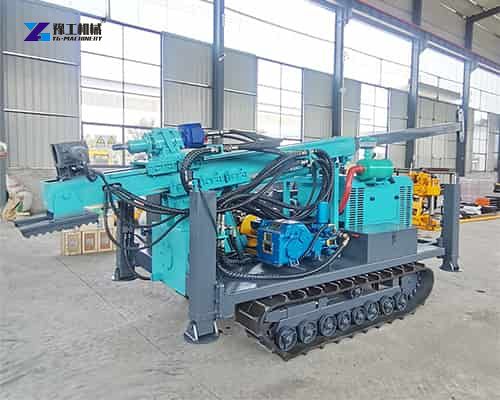
Primary Application Scenarios in the Field
The core sample drilling machine is engineered for versatility across multiple geological and industrial sectors.
In mineral exploration, it is widely utilized to map ore bodies, assess gold, copper, or iron reserves, and extract samples for metallurgical lab testing.
Civil engineering teams deploy these rigs for pre-construction foundation testing, bridge pier ground testing, tunnel route survey, and dam safety evaluations.
Environmental engineers also utilize core rigs to monitor groundwater tables, test soil contamination levels, and analyze structural integrity in quarry operations or mine site remediation projects.
Where a Core Drilling Machine for Mining Delivers the Most Value?
Mineral exploration is the most well-known application. Mining companies use core sample drilling machines to test targets identified by mapping and geophysics, define the boundaries of ore bodies, and provide the resource estimates that underpin feasibility studies and mine planning. In this world, the machine is effectively a sampling instrument, and its recovery rate directly affects the credibility of the entire resource model.
Geotechnical engineering is another major market. Before a bridge, highway, high-rise, dam, or tunnel is designed, engineers need to know the strength, layering, and behavior of the ground beneath it. Core samples reveal the depth of weathered rock, the position of faults and joints, and the load-bearing character of each layer. This information determines foundation depths, pile designs, and construction methods, and it protects projects from expensive surprises during excavation.
Environmental and hydrogeological work relies on core sampling as well. Contaminated-site investigations use cores to map the extent of pollutants and choose cleanup strategies, while water-resource studies depend on accurate subsurface data to locate aquifers and plan wells. Energy projects, including geothermal and coal exploration, also deploy core sample drilling machines to verify subsurface conditions before committing capital.
Frequently Asked Questions About Core Sample Drilling
What factors determine the ideal drilling rig for a project?
The primary considerations include required drilling depth, ground strata hardness, target core diameter, site accessibility, and required drilling angles.
How does the dual cooling system benefit long drilling operations?
Combining air cooling with water cooling ensures that engine and hydraulic fluids remain within optimal operating temperature ranges during high-ambient heat or heavy load conditions.
Can these rigs perform angle drilling on sloped terrain?
Yes, models in this range support flexible drilling angles from vertical down to 45 degrees, with select models offering full 0 to 90-degree positioning.