
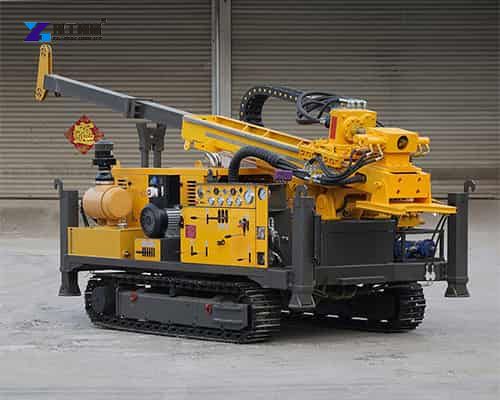
Full hydraulic core drilling rig is a professional drilling system designed for geological exploration, mineral resource investigation, engineering geology, and other demanding drilling operations. By using hydraulic power to control the main drilling functions, this type of equipment provides an integrated solution for rotary drilling, feed control, lifting operations, and other essential drilling processes, depending on its configuration. For mining companies, geological exploration contractors, drilling service providers, and engineering organizations, choosing the right full hydraulic core drilling machine is an important step toward improving operational efficiency and maintaining reliable drilling performance in challenging ground conditions. The hydraulic core drilling rig is intended for specialized ground drilling applications. You can select its configuration, drilling capacity, mobility, and auxiliary systems based on project requirements, geological conditions, and the intended drilling method. If you have specific requirements for this machine, please contact us to discuss more details. 【Email: admin@ygbuildingpro.com Phone/Whatsapp/Wechat: +86 18337123872 】
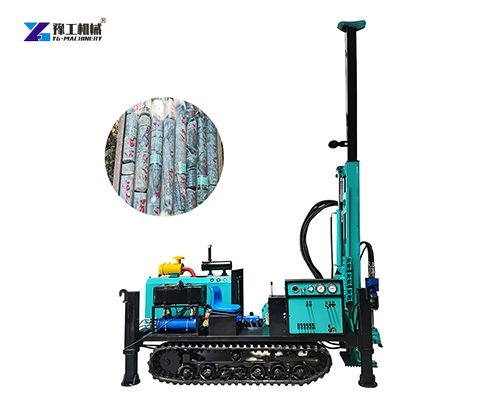
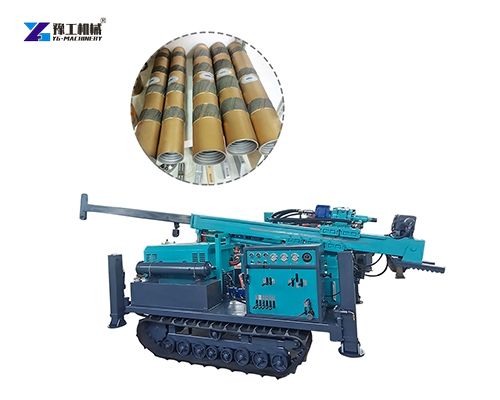
Full Hydraulic Core Drilling Rig Configurations
| Model | YG-400 | YG-600 | YG-800 | YG-1000 | YG-1200 | YG-1500 | YG-2000 | |
| Drilling Capacity | Caliber | HTW-NTW-BTW | ||||||
| Depth | 200-400-500 (M) | 350-700-800 (M) | 400-900-1000 (M) | 500-1100-1400 (M) | 500-1200-1500 (M) | 500-1500-1800 (M) | 1000-2000-2500 (M) | |
| Hydraulic System | Rated Pressure | 20 (MPA) | 20 (MPA) | 28 (MPA) | 28 (MPA) | 28 (MPA) | 28 (MPA) | 28 (MPA) |
| Rated Flow Rate | 160 (L/min) | 220 (L/min) | 280 (L/min) | 300 (L/min) | 330 (L/min) | 350 (L/min) | 460 (L/min) | |
| Heat Dissipation Method | Air cooling | |||||||
| Engine | Brand | Yuchai | ||||||
| Type | Turbocharged | |||||||
| Rated Speed | 2400 (RPM) | |||||||
| Rated Power | 70 (KW) | 92 (KW 6-cylinder) | 118 (KW 6-cylinder) | 118 (KW 6-cylinder) | 140 (KW 6-cylinder) | 150 (KW 6-cylinder) | 162 (KW 6-cylinder) | |
| Drilling System | Torque | 350-700 (N.M) | 450-1300 (N.M) | 450-2200 (N.M) | 1000-3500 (N.M) | 1000-3800 (N.M) | 1000-4000 (N.M) | 1000-6400 (N.M) |
| Speed | 1300 (RPM) | 1300 (RPM) | 1300 (RPM) | 1300 (RPM) | 1300 (RPM) | 1300 (RPM) | 1100 (RPM) | |
| Tower Type | Integrated ground contact type | |||||||
| Go Ahead with the Process | 1900 (MM) | 1900 (MM) | 2400 (MM) | 3500 (MM) | 3500 (MM) | 3500 (MM) | 3800 (MM) | |
| Drilling Tower Angle | 45-90 (°) | |||||||
| Boosting Power | 14 (T) | 16 (T) | 24 (T) | 28 (T) | 30 (T) | 36 (T) | 40 (T) | |
| Give in Strength | 7 (T) | 8 (T) | 12 (T) | 14 (T) | 15 (T) | 18 (T) | 20 (T) | |
| Transmission Type | Direct connection box | Gear box | Variable speed gear box | |||||
| Rope Hoist | Boosting Power | 600 (KG) | 600 (KG) | 800 (KG) | 1000 (KG) | 1000/8000 (KG) | 1000/10000 (KG) | 1000/15000 (KG) |
| Speed | 100-300 (RPM) | 100-300 (RPM) | 100-300 (RPM) | 100-300 (RPM) | 100-300/0-50 (RPM) | 100-300/0-50 (RPM) | 100-400/0-50 (RPM) | |
| Steel Wire Rope Diameter | 6 (MM) | 6 (MM) | 6 (MM) | 6 (MM) | 6/16 (MM) | 6/18 (MM) | 6/24 (MM) | |
| Rope Capacity | 600 (M) | 700 (M) | 900 (M) | 1100 (M) | 1200/40 (M) | 1500/50 (M) | 2000/45 (M) | |
| Walking System | Operation Type | Manual + Remote control | ||||||
| Walking Speed | 3.5 (KM/H) | 3.5 (KM/H) | 3.5 (KM/H) | 3.5 (KM/H) | 3.5 (KM/H) | 3.5 (KM/H) | 3.5 (KM/H) | |
| Climbing Angle | 40 (°) | 40 (°) | 40 (°) | 40 (°) | 40 (°) | 40 (°) | 40 (°) | |
| Mud Pump | Model | BW-100 | BW-120 | BW-150 | BW-150 | BW-200 | BW-250 | BW-320 |
| Flow | 0-100 (L/MIN) | 0-120 (L/MIN) | 0-150 (L/MIN) | 0-150 (L/MIN) | 0-200 (L/MIN) | 0-250 (L/MIN) | 0-320 (L/MIN) | |
| Pressure | 0-7 (MPA) | 0-7 (MPA) | 0-7 (MPA) | 0-7 (MPA) | 0-10 (MPA) | 0-10 (MPA) | 0-10 (MPA) | |
| Hydraulic Generator | Type | Variable frequency, brushless and maintenance-free | ||||||
| Power & Voltage | 11KW 220V/380V | |||||||
| Size & Weight | Transport Size | 4200*2050*2300 (MM) | 4200*2050*2300 (MM) | 4900*2100*2360 (MM) | 6000*2100*2400 (MM) | 6000*2100*2400 (MM) | 6000*2100*2400 (MM) | 6293*2210*2762 (MM) |
| Whole Machine Weight | 4.3 (T) | 5.6 (T) | 7 (T) | 8.5 (T) | 9.5 (T) | 10.5 (T) | 12.7 (T) | |
Get A Solution for Your Project
What Is a Hydraulic Core Drilling Rig Used for?
During core drilling, a suitable core barrel and drill bit are used to recover cylindrical samples of underground rock formations. These samples help geologists and exploration teams examine lithology, mineralization, geological structures, and changes in subsurface conditions. The full hydraulic configuration allows key drilling functions to be coordinated through the full hydraulic core drilling rig’s hydraulic system. This can provide operators with responsive control over drilling operations and help maintain consistent working conditions when the equipment is properly matched to the formation.
Applications of a Full Hydraulic Core Drilling Machine
1. Geological Exploration
Geological exploration is one of the principal applications of a full hydraulic core drilling rig. Exploration teams use core drilling to investigate underground formations, determine rock characteristics, and establish geological information for further technical evaluation. Recovered core samples can help geologists identify lithological boundaries, fractures, alteration zones, and other features relevant to exploration planning. The appropriate rig configuration depends on the geological objectives, required borehole depth, core diameter, sampling method, and site conditions.
2. Mineral Exploration and Mining
Mineral exploration projects require reliable drilling equipment capable of supporting systematic subsurface investigation. Core drilling can provide valuable samples for identifying and evaluating mineralized zones. The hydraulic core drilling rig can be selected for mineral exploration programs where controlled drilling and representative core recovery are important.
3. Engineering Geological Investigation
Engineering geological investigations help project teams understand ground conditions before construction or infrastructure development. Core drilling can be used to investigate rock layers, geological discontinuities, weathered formations, and other subsurface characteristics relevant to foundation design and engineering assessment. A suitable full hydraulic core drilling rig can support these investigations when its drilling capacity and configuration meet the project’s technical requirements.
4. Hydrological and Hydrogeological Investigation
Hydrological and hydrogeological projects may require boreholes to investigate subsurface formations, groundwater conditions, and geological structures. Depending on the project design, a full hydraulic core sample drilling rig may be suitable for investigation drilling that requires geological sampling alongside borehole development. The drilling method, borehole construction, sampling requirements, and equipment configuration should be established according to the investigation objectives.
5. Geotechnical Investigation
Geotechnical investigations provide information about subsurface conditions for infrastructure, industrial facilities, and other engineering projects. Core drilling can support the evaluation of rock quality, fracture patterns, and geological characteristics that influence engineering decisions. When selecting a full hydraulic core drilling rig for geotechnical work, buyers should consider the required investigation depth, core size, drilling method, and site accessibility.
6. Infrastructure and Construction-Related Ground Investigation
Large infrastructure projects may require geological drilling before tunnels, dams, roads, bridges, power facilities, and other structures are developed. A properly configured full hydraulic core sample drilling machine can help investigation teams obtain subsurface information for project planning and engineering analysis.
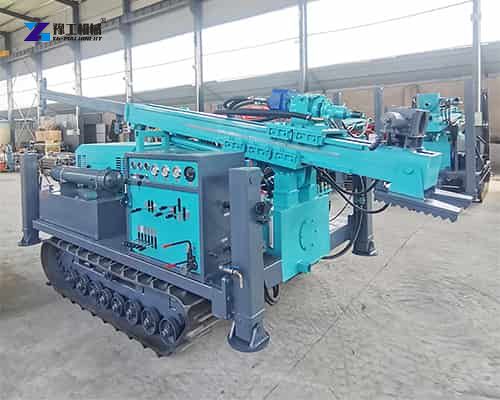
Advantages of a Hydraulic Core Drilling Rig Machine
1. Coordinated Hydraulic Operation
Hydraulic control allows multiple drilling functions to operate through a coordinated system. This can help operators manage drilling, feeding, and lifting activities efficiently, subject to the rig’s design. For demanding exploration projects, controlled operation is an important factor in maintaining stable drilling conditions.
2. Adaptability to Changing Geological Formations
Ground conditions can change significantly throughout a borehole. A suitably configured hydraulic drilling system allows operators to adjust relevant operating parameters to address different formation characteristics. The combination of hydraulic control, appropriate drilling tools, and experienced operators can support consistent progress across variable geological conditions.
3. Support for Core Recovery and Geological Analysis
The ability to recover representative rock samples is central to many exploration projects. The full hydraulic core drilling rig configured for the required core drilling method can support the collection of samples for geological logging and laboratory analysis. Actual recovery quality depends on formation characteristics, core barrel design, drilling parameters, sampling procedures, and operator experience.
4. Equipment Options for Different Project Requirements
Different exploration projects have different capacity, transportation, and operational requirements. The hydraulic core drilling rigs can be offered in different configurations to address these needs. Selecting the correct arrangement helps contractors align the drilling system with the project scope, site access, ground conditions, and supporting equipment.
5. Long-Term Equipment Value
A drilling rig is a major investment for exploration and drilling businesses. Buyers should consider not only the purchase price but also serviceability, replacement parts, maintenance requirements, operator training, and technical assistance. A machine that fits the intended application and can be maintained effectively may provide better long-term value than equipment selected solely on its initial cost.
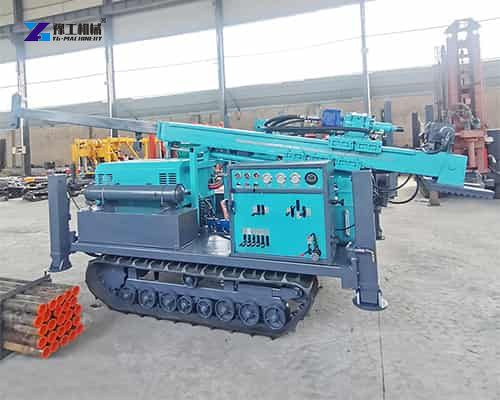
How to Choose the Right Hydraulic Core Sample Drilling Rig?
1. Determine the Required Drilling Depth
Drilling depth is one of the most important criteria when selecting a full hydraulic core drilling rig. Different models have different rated capacities, and the practical drilling depth depends on more than the nominal specification. Factors such as drill rod weight, borehole diameter, formation conditions, drilling method, and available operating power can influence the achievable depth.
2. Define the Required Core Diameter
The required core diameter depends on the geological sampling program and the project’s technical specifications. Confirm the compatible core barrel, drill bit, drill rod system, and other relevant components before ordering. A rig must be suitable for the intended combination of drilling tools and sampling requirements.
3. Evaluate the Geological Conditions
Different formations create different drilling challenges. Hard rock, fractured formations, loose overburden, and mixed geological layers may require different drilling methods and tool configurations. Please provide the supplier with available geological information, including expected formation types, anticipated groundwater conditions, and the purpose of the drilling program. This information helps determine whether the proposed rig is suitable for the project.
Frequently Asked Questions About Full Hydraulic Core Drilling Rigs
Q1: What is a hydraulic core drilling rig used for?
The full hydraulic core drilling machine is primarily used for geological exploration, mineral investigation, engineering geology, geotechnical investigation, and other suitable subsurface drilling applications. Its main purpose in core drilling projects is to create boreholes and recover rock samples for geological assessment.
Q2: Can the hydraulic core drilling rig machine be used for mineral exploration?
Yes. A suitably configured full hydraulic core drilling rig can be used for mineral exploration where boreholes and rock core samples are required. The correct model depends on the target formation, drilling depth, core diameter, sampling method, and project conditions.
Q3: How do I determine the drilling capacity I need?
Start by identifying the required drilling depth, core diameter, expected geological conditions, and planned drilling method. We also need to consider drill rod specifications, equipment mobility, available power, and supporting systems.