
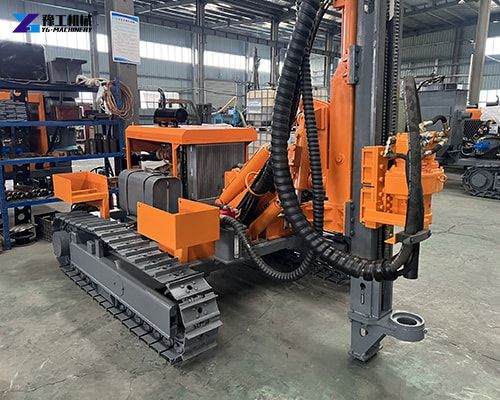
Down the hole drilling rig, commonly known as a DTH drilling rig, is a specialized drilling machine designed for efficient drilling in hard rock and challenging ground conditions. By placing the drilling hammer directly at the bottom of the borehole, a DTH system transfers impact energy more efficiently to the rock formation, making it suitable for demanding drilling applications. During operation, compressed air or another suitable power source drives the hammer, while the drill bit breaks the rock at the bottom of the hole. The drilling rig simultaneously provides rotation, feed pressure, and positioning to maintain stable drilling performance. This combination makes the DTH drilling rig a preferred solution for mining, quarrying, construction, and energy projects where hard formations and fast penetration matter.
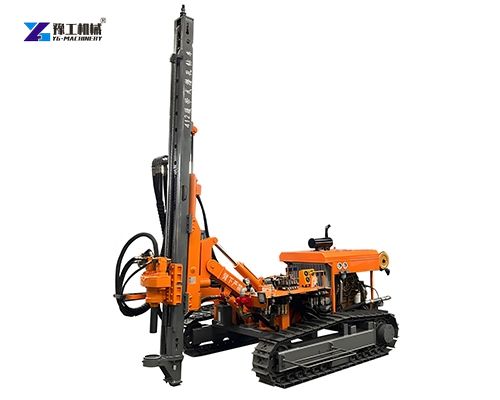
Technical Specifications of the Down the Hole Drilling Rig
| Main Specifications | YG-412 | YG-420 |
| Feeding method | Hydraulic cylinder + chain | Hydraulic cylinder + chain |
| Feed total length | 4,600 mm | 5,500 mm |
| Feed extension | 800 mm | 970 mm |
| Feed travel length | 2,680 mm | 3,670 mm |
| Feed force max. | 15 kN | 15 kN |
| Feed speed max. | 16 m/s | 26 m/s |
| Pullback force max. | 25 kN | 25 kN |
| Hole range | Φ90-115 mm | Φ90-127 mm |
| Optimum hole depth | 21 m | 21 m |
| Drill pipe | Φ60 mm x 2 m | Φ76 mm x 3 m |
| Hammer | 3.5″ | 4″ |
| Rotation torque | 1,650 N·m | 2,200 N·m |
| Rotation speed | 100-220 rpm | 0-150 rpm |
| Fuel tank capacity | 115 L | 70 L |
| Tramming speed max. | 2.5 km/h | 2.5 km/h |
| Gradeability max. | 25° | 25° |
| Ground clearance | 310 mm | 310 mm |
| Track frame oscillation angle | / | ±10° |
| Traction force max. | 40 kN | 40 kN |
| Weight (w/o Options) | 3,950 | 4,620 |
| Dimensions (LxWxH) | 4,450×2,080×2,460 mm | 5,700×2,130×2,300 mm |
| Dust Collection | exist | exist |
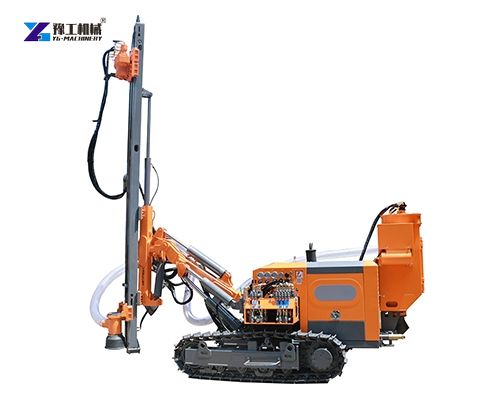
How Does a DTH Drilling Rig Work?
The drilling process begins when the rig is positioned, and the drill pipe is aligned with the desired drilling direction. The drill string rotates while the hammer generates repeated impact energy at the bottom of the hole.
The drill bit transfers this impact force directly into the rock, creating fractures that gradually form the borehole. At the same time, compressed air can help remove rock cuttings from the hole.
Because the hammer operates down the hole rather than at the surface, impact energy loss through the drill string can be reduced, especially as drilling depth increases. This is one of the key reasons why DTH drilling technology is widely used for hard-rock applications.
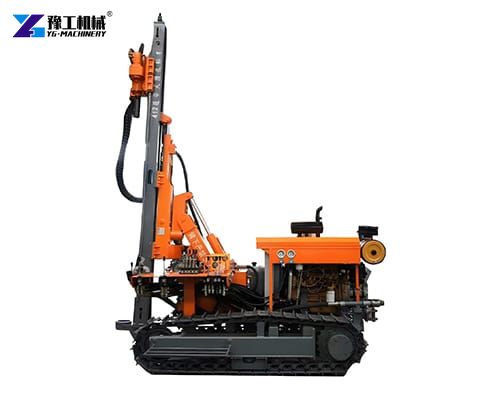
Features of a Down the Hole Drilling Machine
Efficient Hard-Rock Drilling
The main purpose of a down the hole drilling rig is to provide stable and efficient drilling in hard geological formations. The DTH hammer delivers impact energy directly at the drilling face, allowing the equipment to handle demanding rock conditions.
Stable Drilling Performance
A properly designed drilling rig provides controlled rotation, feed force, and drilling alignment. Stable operating conditions can help maintain consistent hole quality and reduce unnecessary wear on drilling components.
Powerful DTH Hammer System
The hammer is one of the most important components of a DTH drilling system. Its design influences impact efficiency, drilling speed, air consumption, and service life. Selecting a hammer that matches the rock formation and drilling requirements is therefore essential.
Adaptable Drill Configuration
Different projects require different hole diameters, depths, and drilling directions. A suitable down the hole drilling rig can be configured with appropriate drill pipes, bits, hammers, and other drilling accessories according to the application.
Reliable Mobility
Many DTH drilling rigs are built on crawler-type platforms, allowing operators to move the machine across uneven construction sites, quarry areas, mining operations, and other demanding environments.
Straight and Accurate Boreholes
When the rig is correctly configured and operated, the DTH drilling method can provide good borehole alignment and consistency. This is particularly important for applications where drilling accuracy affects subsequent construction or blasting work.
Dust and Cuttings Management
During drilling, compressed air is commonly used to help remove cuttings from the borehole. Depending on the machine configuration and working environment, additional dust collection or suppression equipment may be used to improve site conditions.
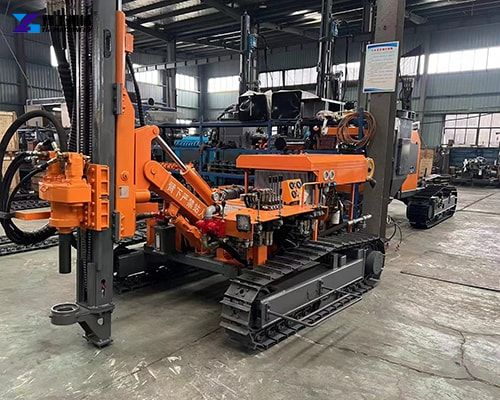
Where Is a Down-the-Hole Drilling Rig Used?
Mining Operations
DTH drilling rigs are widely used in mining for production drilling, exploration-related work, blasting hole preparation, and other rock drilling applications. Their ability to work effectively in hard formations makes them suitable for both surface and selected underground drilling requirements.
Quarry Drilling
Quarries frequently require drilling into hard rock before blasting, splitting, or extraction. A down-the-hole drilling rig can provide the drilling force and stability needed for repetitive quarry operations.
Construction Projects
Construction sites may require rock drilling for foundations, retaining structures, slope stabilization, and other infrastructure work. DTH equipment can be used when ground conditions exceed the practical capabilities of lighter drilling systems.
Geotechnical Drilling
For selected geotechnical applications, down the hole drilling rig can be used to create boreholes for site investigation, ground assessment, and related engineering work. The appropriate drilling method depends on soil conditions, rock characteristics, required depth, and project specifications.
Blast Hole Drilling
Blast hole drilling is one of the most common applications for DTH equipment in mining and quarrying. Consistent hole diameter and drilling direction can help support a controlled blasting plan.
Why Choose a Down-the-Hole Drilling Equipment?
Improved Energy Transfer
A major advantage of DTH technology is the location of the hammer. Because the hammer works close to the drill bit, impact energy does not need to travel the full length of the drill string before reaching the rock.
Effective Performance in Hard Rock
Hard and abrasive formations can be difficult to penetrate with some drilling methods. Down the hole drilling rig is specifically designed around the requirements of rock drilling and can provide a practical solution for demanding formations.
Suitable for Deeper Drilling
DTH drilling can maintain useful impact performance as hole depth increases because the hammer remains at the bottom of the borehole. This makes the technology attractive for projects requiring deeper holes.
Consistent Hole Quality
The combination of rotation, feed control, and down-the-hole impact can provide stable drilling conditions. Good equipment selection and proper operation are still essential to achieve the desired hole quality.
Flexible Application Options
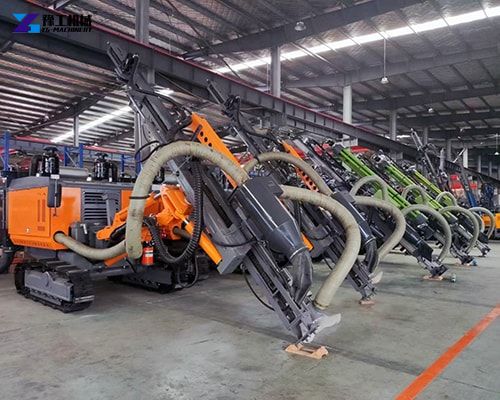
A down-the-hole drilling rig can be used across mining, quarrying, construction, water well drilling, and other rock drilling applications. The required machine configuration can vary according to hole diameter, depth, terrain, and geological conditions.
What Shall We Consider Before Buying a DTH Drilling Rig?
Rock Formation
Start by evaluating the geological conditions of your project. Rock hardness, abrasiveness, fractures, moisture, and formation structure can all influence the appropriate hammer, drill bit, air system, and rig configuration.
Required Hole Diameter
The required hole diameter affects the selection of the DTH hammer, drill bit, and drill pipe. It is important to select a rig that supports the drilling range required for your actual projects rather than choosing equipment based only on general specifications.
Required Drilling Depth
Drilling depth affects the required feed length, drill pipe configuration, compressor capacity, and overall machine setup. If your projects involve different drilling depths, discuss the operating range with the manufacturer before purchasing.
Working Environment
Consider the terrain and accessibility of the job site. A crawler-mounted down the hole drilling rig may be suitable for rough or uneven ground, while machine dimensions and transport requirements should also be considered for projects involving frequent relocation.
Air and Power Requirements
DTH drilling relies heavily on an appropriate air supply. The compressor and drilling system need to work together effectively. When comparing machines, consider not only the rig itself but also the total power and air requirements of the complete drilling system.
How to Select the Right Down the Hole Drilling Rig?
The right machine depends on the specific requirements of your project. A contractor working primarily on quarry blast holes may have different requirements from a water well drilling company or a construction contractor.
A practical selection process should consider the target formation, hole diameter, expected depth, drilling angle, working terrain, required mobility, available power source, compressor requirements, and expected operating frequency.
It is also important to evaluate the complete drilling system rather than focusing on one specification. The rig, DTH hammer, drill bit, compressor, drill pipe, and control system all influence overall drilling performance.